The coldest part of our service area
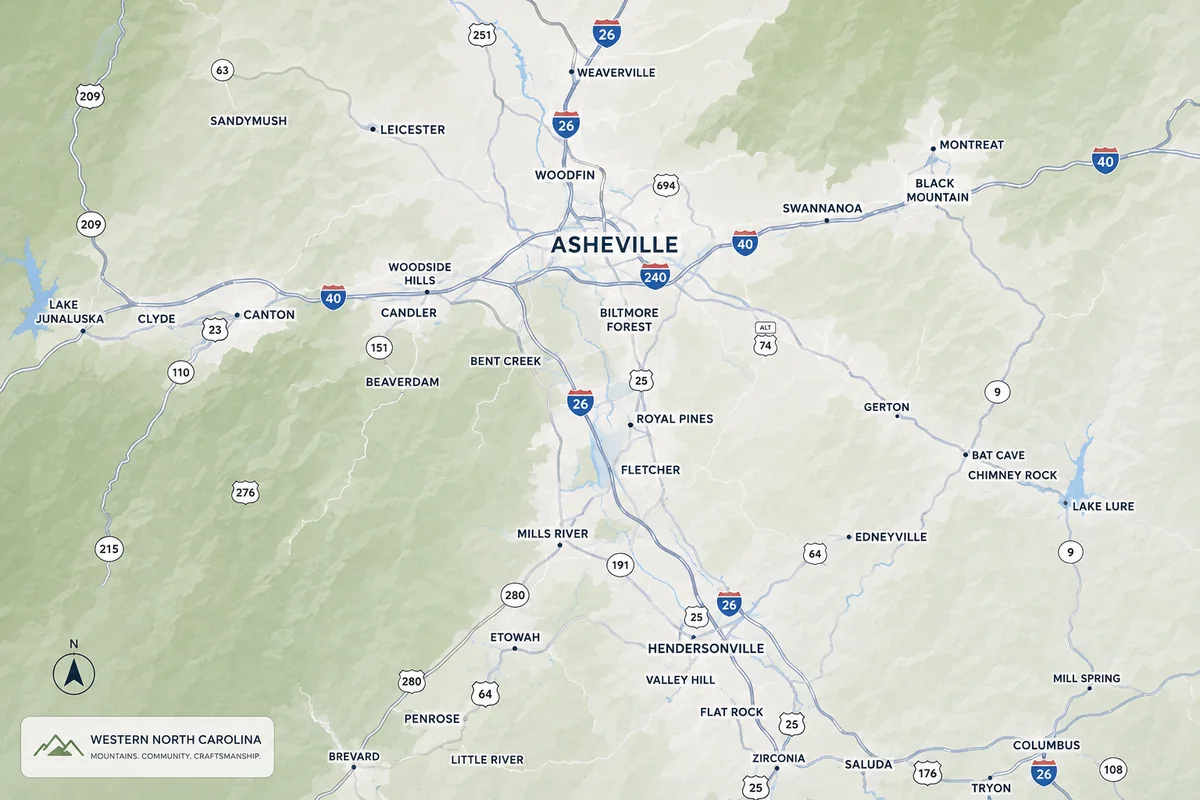
A couple of hundred feet of elevation does not sound like much until you watch it play out over a season. Black Mountain and the upper Swannanoa Valley run colder than the Asheville basin, hold snow longer, and put heat pumps through noticeably more defrost cycles. Go up toward Montreat or out toward the gap and the difference widens again.
This is where sizing and setup stop being a formality. Every heat pump has a balance point — the outdoor temperature below which it can no longer keep up alone and calls on electric backup heat. Set that too high, or size the equipment against a regional average rather than this particular valley, and the strips run all winter at roughly two to three times the cost per unit of heat. That is the power bill people cannot explain.
Our heat pump page goes through how we specify for elevation, and this guide covers what to check yourself before the first hard freeze.
Snow, ice and where the unit sits
Siting matters more here than anywhere else we work:
- Up off the ground. Heat pumps shed a lot of water during defrost. A unit on a slab in wet ground builds a block of ice under the coil through the winter. Ours go on stands.
- Clear of roof drip and slide. A gutter that overflows or a metal roof that sheds onto the unit will ice it over repeatedly.
- Out of the drift line, including where the plow throws snow.
- North-facing sites need extra thought — they thaw last and stay wet longest.
Older cottages, camps and retreat properties
The Swannanoa Valley has a long history of summer cottages, camps and conference properties, many of them built for seasonal use and heated since with whatever was available. Buildings like that are often better served by ductless systems — zone by zone, no ductwork to run through uninsulated space, and the ability to keep unused buildings just above freezing without conditioning them fully.
Access in winter
Steep drives and switchbacks are normal up here, and they are part of how we plan a no-heat call in January. Tell us about your access when you book and we will come prepared rather than turning around at the bottom of the hill.