The thermal belt is real, and it matters
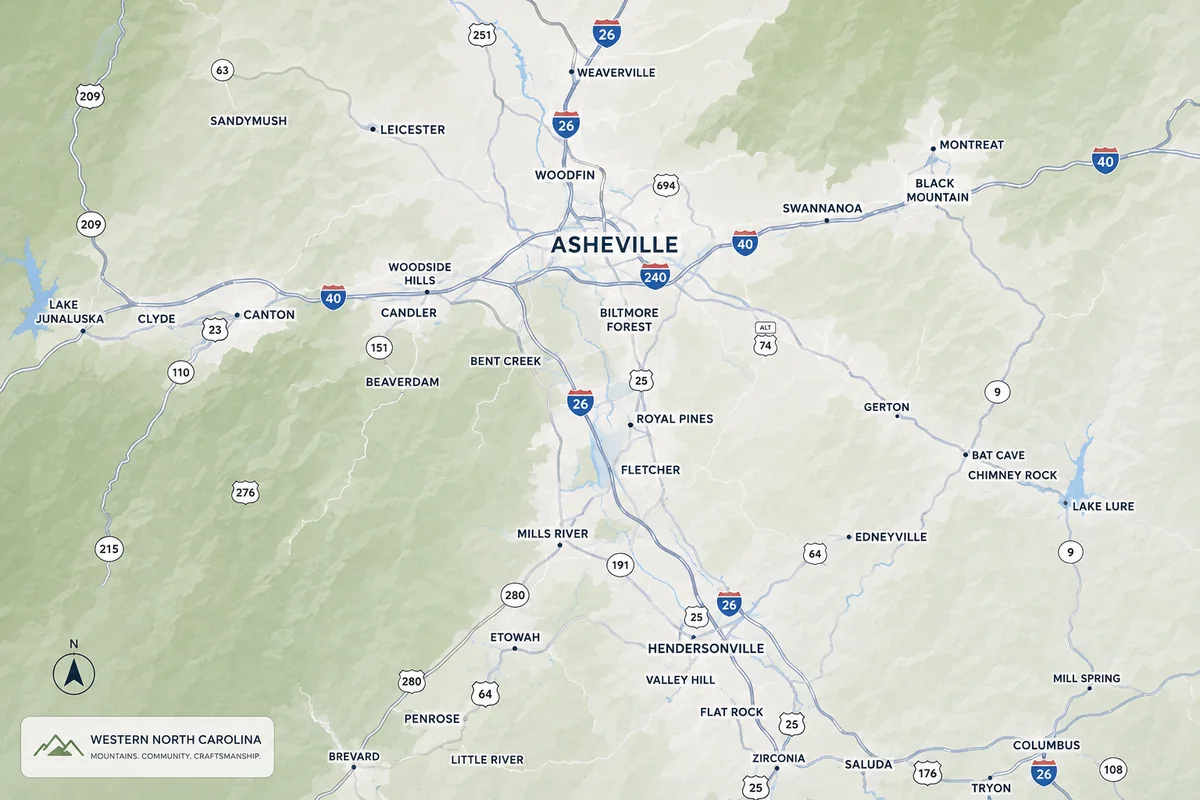
Polk County sits in what was named the isothermal belt back in 1858 — a zone, primarily across Polk and Rutherford counties, where temperature inversions on south-facing slopes sheltered by higher mountains to the north and northwest keep conditions milder than the surrounding land. It is why this is apple and grape country, and why the growing season runs long here.
For heating and cooling it means something specific: the assumptions that hold in Asheville or Black Mountain do not automatically hold in Tryon. A house inside the belt may see meaningfully fewer hard freezes than one a short drive away at higher elevation, which changes the balance point a heat pump should be set to and can change which equipment is the better value in the first place.
One county, three very different jobs
Tryon and the lower foothills. Down in the belt, milder winters and a longer cooling season. Summer humidity and dehumidification tend to matter more than cold-weather capacity. Equestrian properties are common, and barns, tack rooms and guest quarters are usually best served by their own ductless systems rather than extending the house system across a yard.
Columbus and the middle of the county. Transitional — genuinely foothills, with a mix of housing ages and a fair amount of propane where gas lines never reached.
Saluda and the higher ground. Up at the top of the grade the picture flips: real winter, more defrost cycles, and the siting and drainage concerns that go with them. A system specified for a house in Tryon would be the wrong system here.
Why we look at the site, not the address
Everywhere we work, elevation and exposure matter. In Polk County they can differ by more than two thousand feet within a twenty-minute drive, and the belt means elevation alone does not even tell the whole story. We size against an actual load calculation for your house — orientation, insulation, glass, exposure and where it sits — rather than a rule of thumb. It is the difference between a system that runs long, quiet, efficient cycles and one that fights the house for fifteen years.
Rural properties
Long driveways, well water, septic, outbuildings and open exposure are all normal here. They shape where equipment can go, where condensate can drain, and how we plan winter access on a no-heat call. Tell us about the property when you book and we will come prepared.