
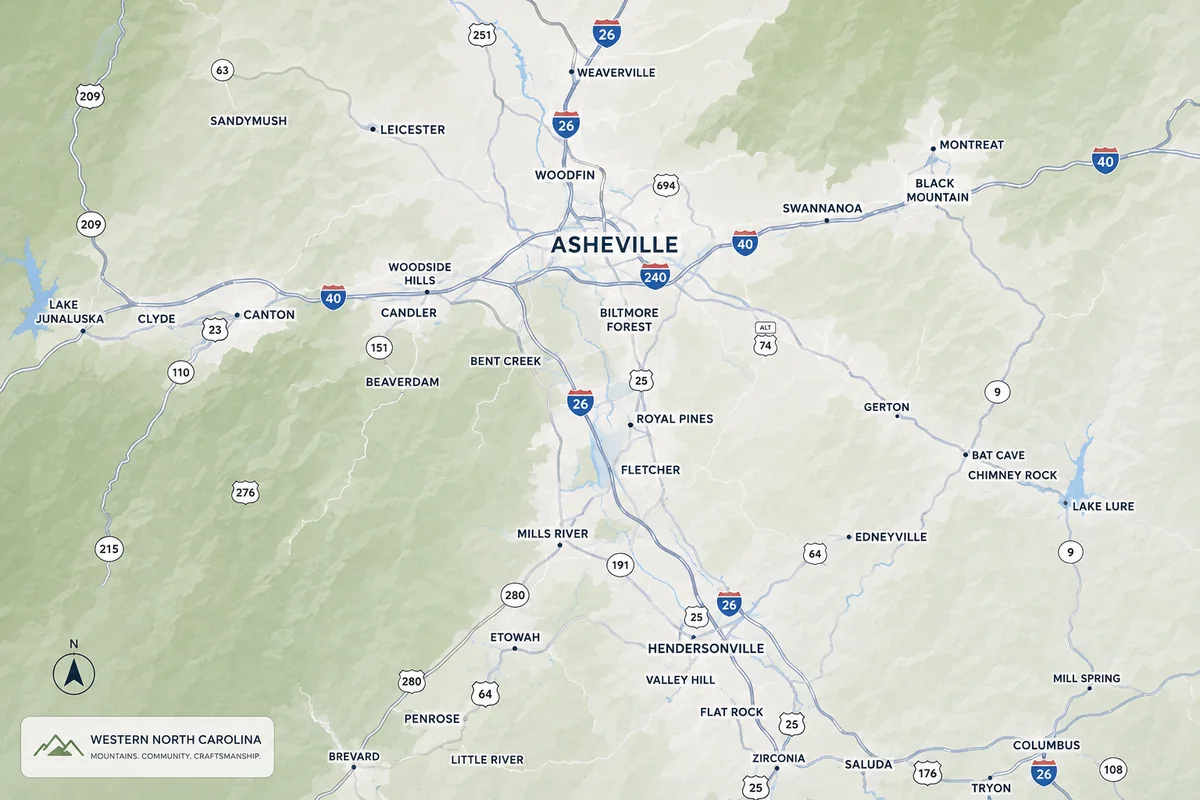
A town built mostly in the last thirty years
Fletcher went from under three thousand people in 1990 to nearly eight thousand by 2020, and almost all of its residents live in developed neighbourhoods rather than out on the land. Practically, that means a large, fairly uniform stock of houses built from the mid-nineties onward — and a matching stock of heat pumps that all went in around the same time and are all aging out around the same time.
The result is that Fletcher generates more system replacement conversations per call than almost anywhere else we work. It also means we see the same builder-era mistakes repeatedly: equipment sized by square footage, flex duct run through hot attics, and returns that were never adequate for the upstairs.
The advantage of that uniformity
Because so many Fletcher houses share a layout and a vintage, we usually have a good idea what we are walking into before we get there — which duct runs will be starved, where the return is missing, which model of air handler is in the closet. That shortens diagnosis and it means the fixes we recommend have been tested on houses very like yours.
Ductwork before equipment
If your Fletcher house runs long cycles without ever getting comfortable upstairs, the instinct is to buy a bigger system. We measure static pressure first, because in this housing stock the restriction is usually in the ducts. A larger unit pushing against the same restriction disappoints you at greater expense. Sealing, resizing a trunk or adding a return often delivers more than new equipment would.
Airport-adjacent and exposed
Parts of Fletcher sit open, flat and windy by Western North Carolina standards. Outdoor units here catch more weather, more blown debris and more drift than units tucked into a hollow. Keeping eighteen inches clear around the unit matters more than most people think, and it is worth a look each fall.